Unguarded love & men
A man is telling me something he has never said aloud. He’s vulnerable, watching my face, eyes, waiting for the awkwardness to land. It doesn't come. Something shifts in his shoulders, and it's like watching a suit of armour fall to the floor. Underneath is just a person, with all the tenderness and humanity that was there the whole time.
What makes this ease of communicating possible is the way I work. The cornerstone of the person-centred approach is what Carl Rogers called unconditional positive regard: accepting the person fully, whatever they bring. Rogers described this as a kind of love because, for many people, that's what it can feel like.
For men, I think it lands differently, because so many of us were taught that love has conditions, restrictions.
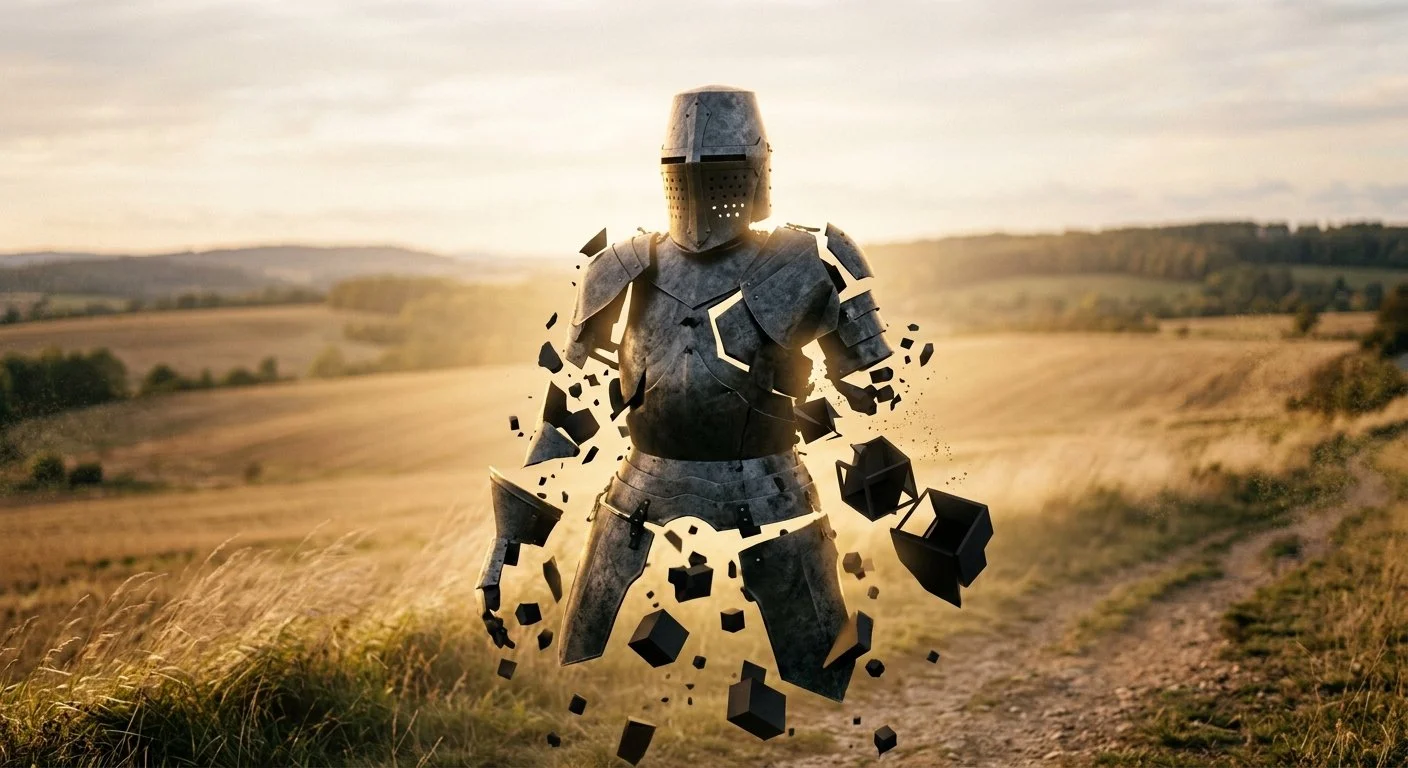
The armour we no longer need
I grew up in Dundee, where the rules of life came thick and fast. Don't cry. Don't kiss another man, including your father, because people might think you're gay, which was resolutely forbidden. Don't experiment with make-up. Don't be too sensitive. Like football (I hated it). Drink. I was a straight teen who didn't know what to do with any of it, and it took years, and a growing sense of developing safety and identity, to put those rules down and accept myself as I am: a highly sensitive, curious and creative man who cares deeply about humanity and the people I find myself alongside, irrespective of gender, sexuality or religion.
I don't think the messages young people receive have improved since then. In some ways they're louder: porn accessibility, incel forums, the manosphere, social media that pays out in likes. I'm wary of drawing a straight line through these modern phenomena, but all of them seem to thrive on and encourage a distorted idea of what a man is, what a woman is and what love is – whether talking about it, making it or expressing ones emotional need for it.
When the armour comes off, what follows is usually relief, and then something harder to name. He may start to talk differently about his partner, his children, his friends, describing them and his relationships openly, warmly. He might bring his deeper, more authentic self to the people in his world.
I don't think therapy is the only place this can happen. But being fully accepted by another person, without having to earn it, is rarer than it should be.